
Fingernails or Fingertips for Classical Ukulele?
The "right" Picking Technique for Classical Ukulele
Anyone who delves deeper into classical ukulele will sooner or later come across a frequently asked question:
Should you play with your fingernails or your fingertips?
The short answer is: Both are possible.
The slightly longer answer is much more interesting. That’s because both playing styles have their own unique character and influence the sound, feel, and expression of your music.
Playing with Fingertips
Many ukulele players naturally start out playing with their fingertips. This playing style feels familiar and produces a warm, soft sound.
Quiet or lyrical pieces in particular benefit from this gentle tone.
Advantages:
- warm and round sound
- comfortable playing feel
- no nail care required
- ideal for beginners
- Disadvantages
- slightly lower volume
- less brilliant highs
For many classical pieces, playing with your fingertips is an excellent choice—especially if you prefer a more intimate and vocal sound.
Playing with Fingernails
In classical guitar, playing with fingernails has been standard practice for many decades. Many classical ukulele players also choose this method.
The nails strike the string somewhat more directly, producing a clearer and more brilliant tone.
This often adds transparency to polyphonic music, making it easier to distinguish individual voices from one another.
Advantages
- clearer and more brilliant sound
- greater volume
- better separation of individual voices
- precise articulation in fast passages
Disadvantages
- regular nail care is necessary
- unfamiliar playing technique at first
- incorrect nail shape can cause unwanted noise
If you play with your nails, you should not let them grow too long. In most cases, one to two millimeters beyond the fingertip is more than enough.
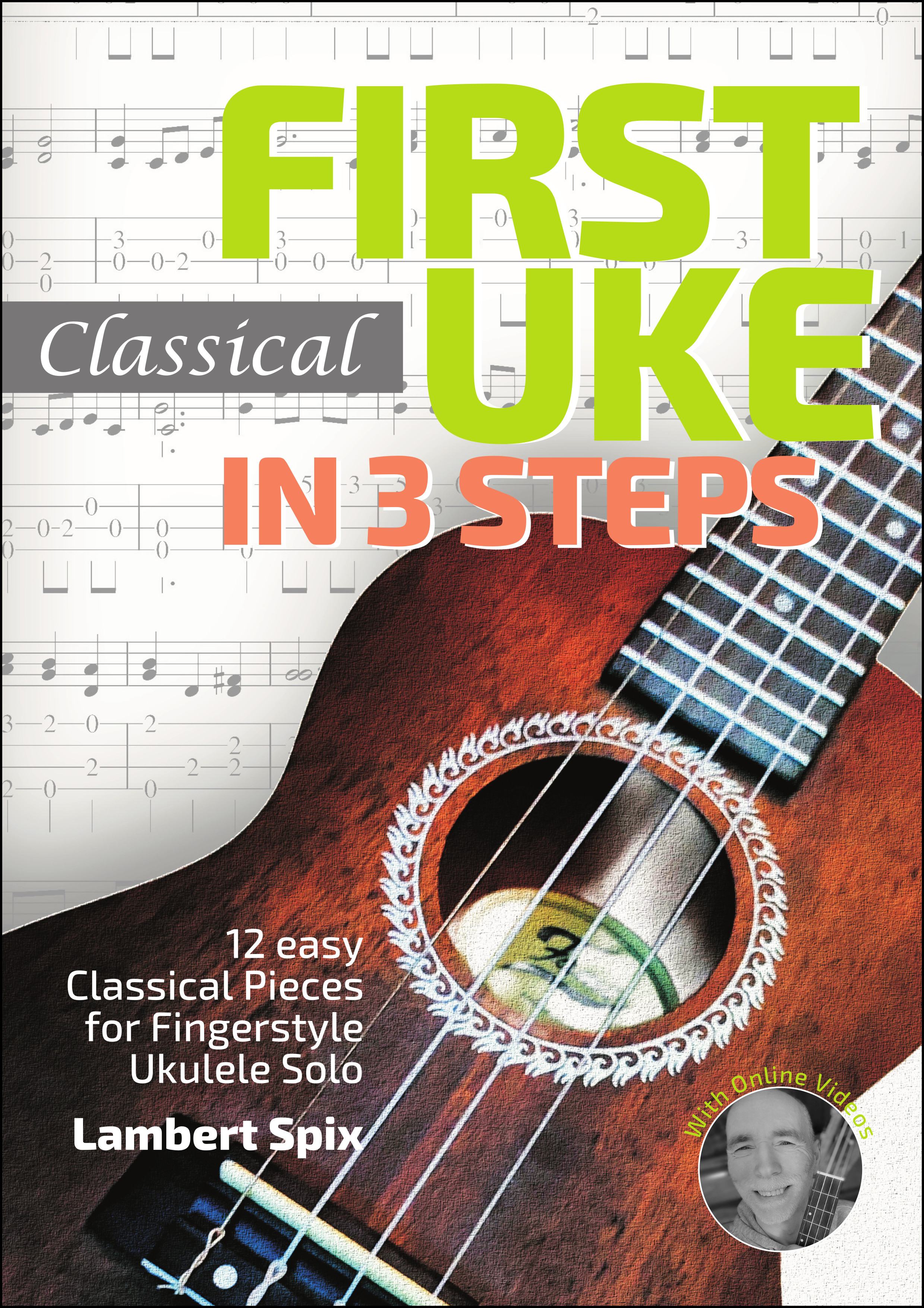
My book First Classical Uke in 3 Steps is ideal for getting started with playing classical music on the ukulele.