
What tuning should I use for classical ukulele?
One of the most common questions among players who want to explore classical music on the ukulele is:
"What tuning should I use for classical ukulele?"
The answer depends on the music you want to play, but for most players there are two options:
- Standard High G tuning (gCEA)
- Low G tuning (GCEA)
Both tunings have their strengths, and many classical ukulele players use both for their repertoire.
Standard High G Tuning (gCEA)
High G tuning is the traditional tuning for the soprano, concert, and tenor ukulele. In this tuning, the fourth string is tuned one octave higher than you might expect, creating the characteristic bright and cheerful ukulele sound.
Advantages of High G
- Authentic traditional ukulele sound
- Bright, clear melodies
Many classical arrangements work beautifully in High G, especially pieces that don't require extended bass notes.
Low G Tuning (GCEA)
In Low G tuning, the fourth string is tuned one octave lower, extending the instrument's range and giving it a richer, more guitar-like voice.
For many players, this tuning unlocks new possibilities for classical repertoire.
Advantages of Low G
- Extended bass range
- Fuller and warmer sound
- More natural bass lines
- Better suited for polyphonic music
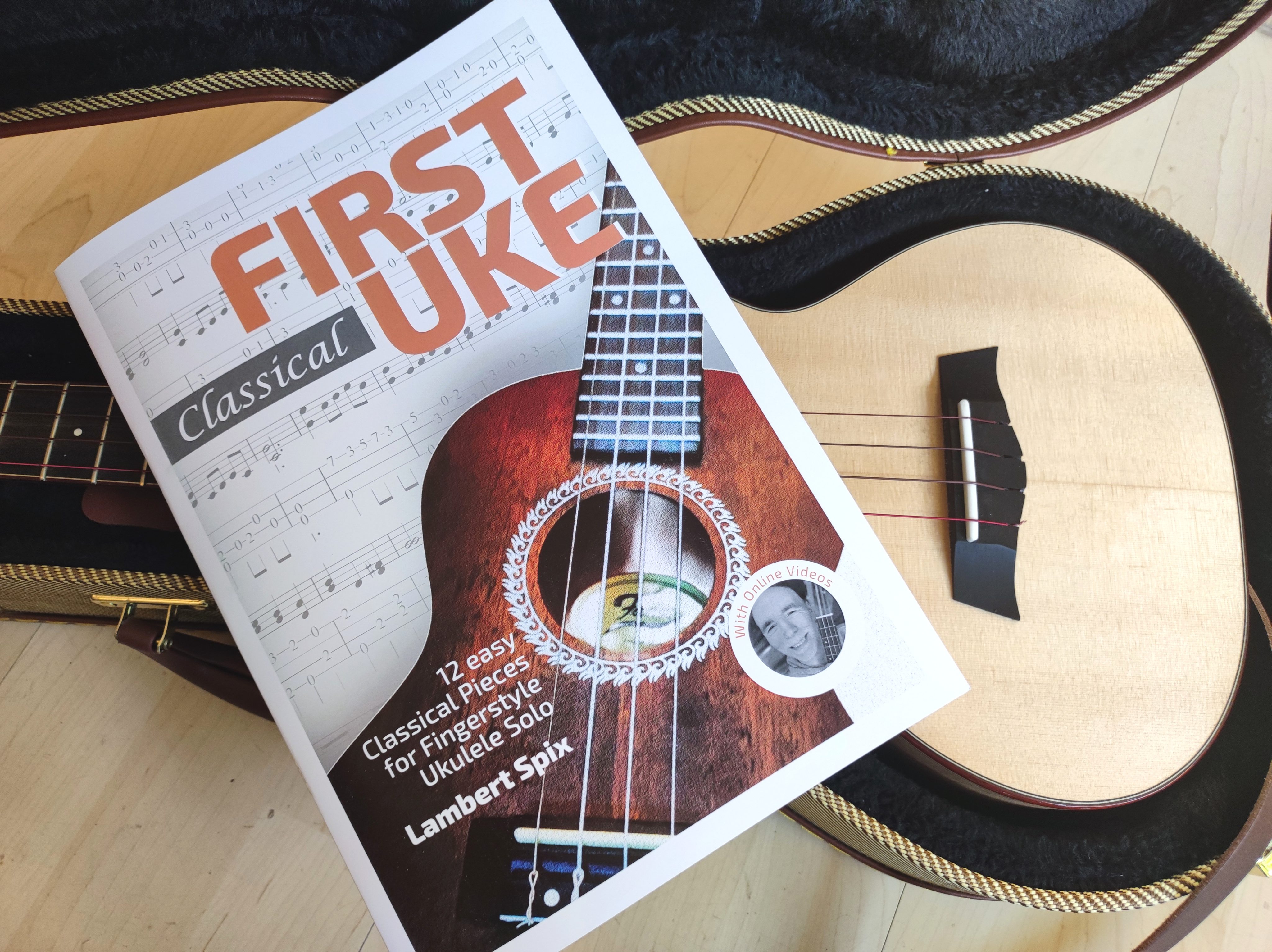
The book “First Classical Uke” easily introduces you to two-voice playing of Classical Pieces.